DIY Activity Ideas for Teaching and Demonstrating Heat - Modes of Transport
Introduction:
Are you a high school teacher or a homeschooling parent looking for engaging activities to teach your students about heat and its modes of transport? Look no further! Here are five exciting and hands-on activities that will make learning about heat a memorable experience.
Activity 1: Heat vs. Temperature
Let us say you are preparing a bathtub for your bath. The water in the bathtub is cold. Now you have 2 options to heat up the water in the bathtub
Add a cup of water which is 100 degree Celsius
Add a large bucket of water with 40 degree Celsius
Materials Required:
Thermocol balls
Plastic container with a lid
Balloon
Procedure:
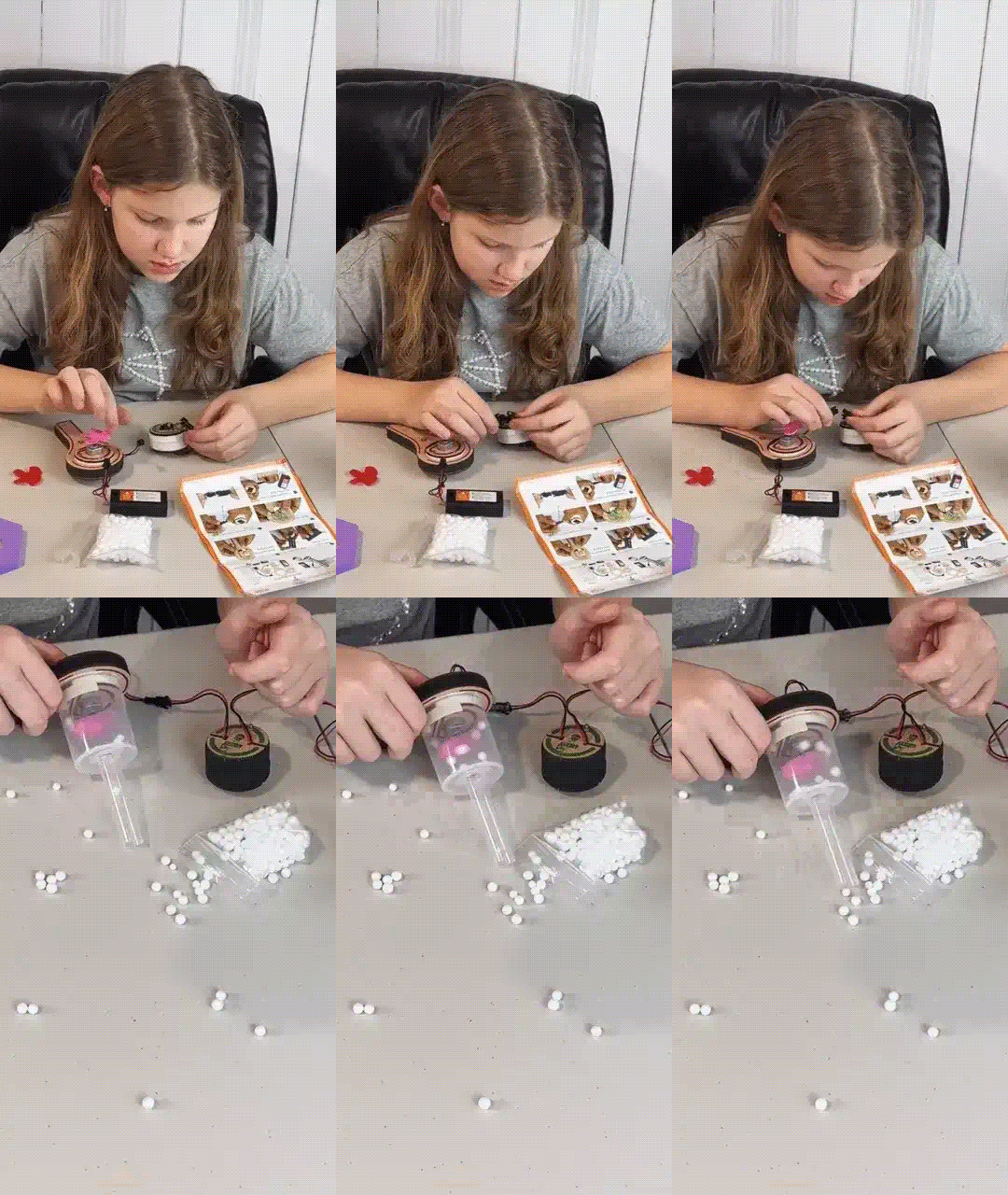
Begin by pouring thermocol balls into the plastic container. Explain to the students that these balls represent the molecules.
Securely close the lid of the container.
Blow up the balloon and then release the air slowly into the container.
Observe the movement of the thermocol balls as the air is released.
Repeat the process, adding more thermocol balls each time, and have the students observe and compare the movement of the balls.
Encourage them to conclude why the movement of the balls is more pronounced when more air is present.
Although the molecules in bucket aren’t moving as fast as in the cup, there are more of them so they make in mass, what they lack in speed
So, bucket of water with 40 degree celsius is better at heating the bathtub than a cup of water of 100 degree celsius.
Activity 2: Heat Transfer
Materials Required:
Candle
Metal strip
Procedure:
Light the candle and let it burn for a few minutes.
Carefully hold one end of the metal strip with one hand and touch the other end to the flame of the candle.
Observe and discuss how heat is transferred from the candle flame to the metal strip through conduction.
Caution: Handle the metal strip carefully to avoid burns.
Activity 3: Rate of Heat Transfer in Different Materials
Materials Required:
Candle
Copper, aluminum, and steel rods
Clay
Three metal balls
Three foam bars
Procedure:
Light the candle and let it burn for a few minutes.
Attach a metal ball to each of the rods using clay.
Place one foam bar on top of each metal ball.
One by one, touch the foam bars to the flame of the candle and compare the rate at which heat is transferred through different materials.
Encourage students to record their observations and discuss why certain materials conduct heat faster than others.
Activity 4: Heat Transfer - Convection
Materials Required:
Foam pieces
incense stick
Candle
J joint pipe and L joint pipe
Transparent sheet
M seal
Procedure:
Create a model to represent heat transfer through convection using foam pieces.
Attach the foam pieces to the incense stick or dowel to represent the heat source and the surrounding air.
Attach the J joint pipe and L joint pipe to the foam pieces to represent the movement of air.
Place a candle near the heat source and observe how convection currents are formed.
Use the transparent sheet and M seal to enclose the model and visualize the movement of heat through convection.
What's happening?
Activity 5: Measuring Temperature with a Thermometer
Materials Required:
Container
Lid
Balloon
Small pipe
Colored water
Procedure:
Cut a small hole in the container’s lid and insert the small pipe into it.
Securely attach the balloon to the open end of the pipe.
Fill the container with colored water until it reaches the bottom of the pipe.
Observe how the water level in the pipe rises or falls with changes in temperature.
Discuss the principles of thermal expansion and how thermometers work.
What's Happening?
When the thermometer is heated both water and air start expanding.
The air expands more than the water and pushes the water down.
The water then enters into the tube and shows the temperature.
These DIY activities will not only engage your high school students or homeschoolers but also help them grasp the concepts of heat and its modes of transport in a fun and interactive way. Enjoy exploring the fascinating world of heat with your eager learners!