DIY Activity Ideas: Exploring Plant Fibres
and the Process of Making Yarn
Introduction:
Understanding the process of converting plant fibres into fabric is essential in the study
of textiles. In this series of DIY activities, we will explore different aspects of plant fibres
and engage in hands-on experiments to learn about the process of making yarn.
Activity 1: Unweaving a Cloth
Materials Required:
Cloth sample
magnifying lens
Procedure:
Observe the pattern of unweaving in a cloth using a magnifying lens. This activity allows students to closely examine the structure of the cloth and understand how the individual threads are woven together.
Activity 2: Spinning Increases Strength
Materials Required:
Cotton
Procedure:
Take a cotton fibre and twist it using your fingers to form a makeshift yarn. Compare the strength of the spun cotton with the original fibre. This activity demonstrates how spinning increases the strength and durability of fibres.
Twist the cotton
Activity 3: Making Yarn Using Hands
Materials Required:
Cotton
Procedure:
Using only your hands, twist and roll the cotton fibres together to create yarn. This hands-on activity provides a tactile experience of the yarn-making process and highlights the manual skills involved in textile production.
Activity 4: Making Yarn with a Spinning Machine
Model
Materials Required:
Eva foam sheets, cotton
battery (cell)
motor axle
wires
pins
speed control foam piece
hook
alligator clip
thin and fat straw
Procedure:
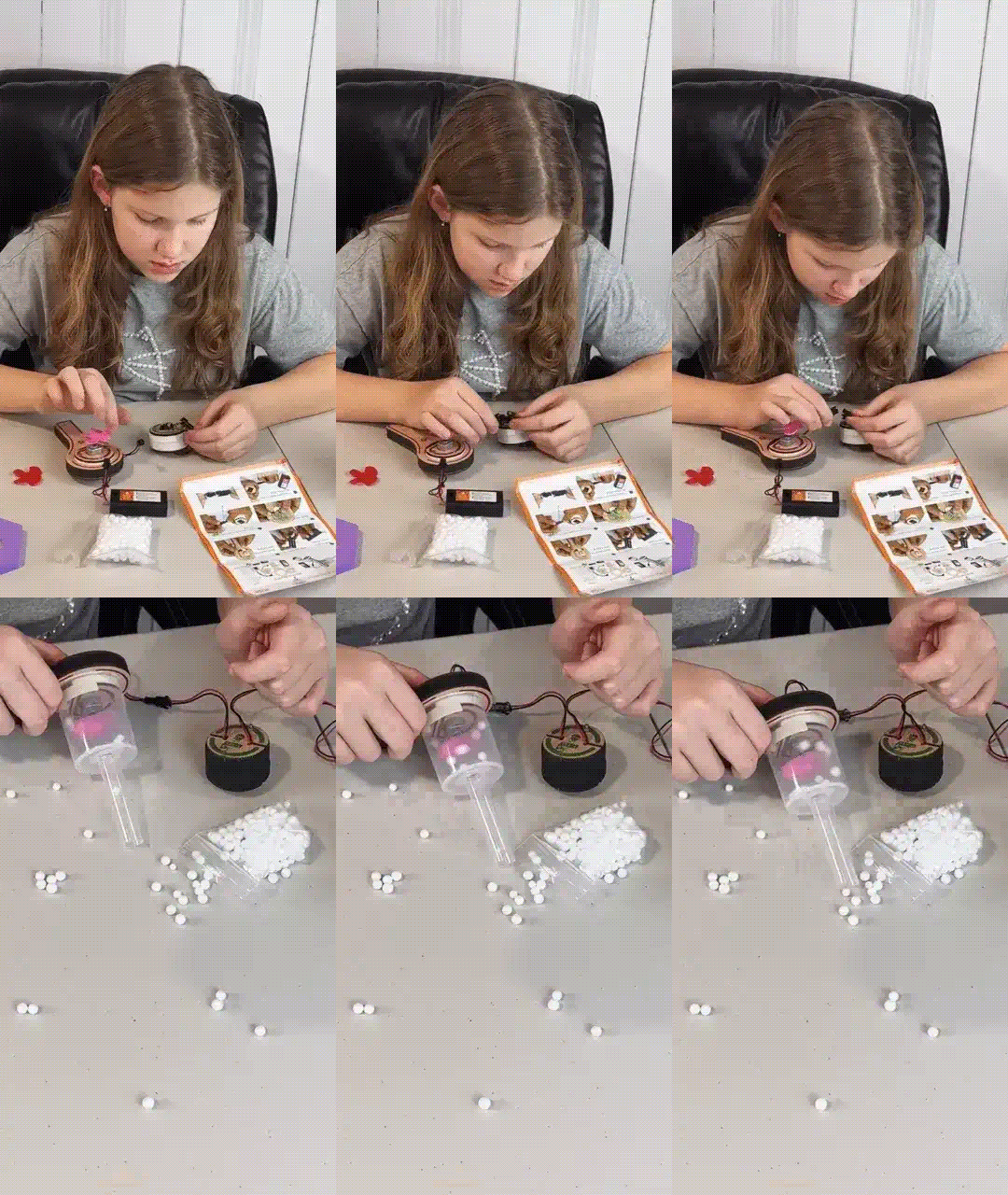
Construct a spinning machine model using Eva foam sheets as the base pad and frame.
Attach a hook and alligator clip to the motor axle, and connect the necessary wires and battery to create a working circuit.
Use the cotton fibre to make the longest possible yarn using the spinning machine model.
Activity 5: Understanding S-Twist and Z-Twist
Materials Required:
Spinning machine model (from Activity 4)
Procedure: By changing the circuit connections in the spinning machine model, observe and compare the resulting yarns with different twists. Understand the difference between S-twist (anti-clockwise) and Z-twist (clockwise) yarns.
Activity 6: Making Thread from Yarn
Materials Required:
Yarn (with S-twist and Z-twist)
Procedure: In Case 1, if the yarn has Z-twist, create S-twist by further twisting it. In Case 2, if the yarn has S-twist, create Z-twist by twisting it in the opposite direction. This activity demonstrates how yarn can be further twisted to create thread suitable for weaving or sewing.
₹1,199.00Original price was: ₹1,199.00.₹799.00Current price is: ₹799.00.Add to Cart
Quick understanding pic
From Plant to Fabric: Engaging DIY Activities for Exploring the World of Plant Fibres and Textile Production! These DIY activities provide hands-on experiences that enable students to explore plant fibres, understand the process of making yarn, and appreciate the importance of spinning and twisting in textile production. By engaging in these experiments, students will gain a deeper understanding of the fiber-to-fabric process and the role of plant fibers in the textile industry.