Engaging Light and Reflections DIY Activities for High School Teachers & Homeschooling Parents

Introduction:

Welcome to our DIY activity blog post designed to captivate high school students and facilitate their understanding of light and reflections. In this post, we will share five exciting activities that are perfect for both teachers and homeschooling parents. These hands-on projects will enable students to explore and comprehend the intriguing phenomena of light and reflections. Let's dive into the activities!

Recap:

  • Light travels in a straight line      
  • Light changes direction when it falls on a mirror
  •  White light is composed of 7 different colors
  • Reflection: The light can bounce off the surface of the object, following the law of reflection, which states that the angle of incidence is equal to the angle of reflection. This is what allows us to see objects; light reflects off them and into our eyes.
  • Absorption: The object may absorb some or all of the incident light, converting it into other forms of energy (e.g., heat). The absorbed light is not reflected, making the object appear dark or not visible.
  • Transmission: Some objects are transparent or translucent, allowing light to pass through them. In such cases, the light is transmitted through the object, and objects on the other side can be seen through it.
  • Refraction: When light passes through an object with different optical properties (like a lens or water), its direction can change. This phenomenon is known as refraction and is responsible for the bending of light rays.
  • Scattering: Light can be scattered in various directions when it interacts with rough or irregular surfaces, such as in the case of a frosted glass surface or a cloudy sky.
  • Specular Reflectors: These objects have smooth and polished surfaces that cause light to reflect in a well-defined direction. The reflection from such surfaces is highly organized, leading to a clear and sharp image of the light source. Examples of specular reflectors include mirrors, polished metal surfaces, and calm water.

  • Diffuse Reflectors: These objects have rough or irregular surfaces that scatter light in multiple directions. The reflection from diffuse reflectors is less organized and creates a more evenly distributed illumination. Most non-shiny objects, such as paper, wood, cloth, and painted walls, fall into this category.

Activity 1: Exploring the Relation between Angle of Incident and Angle of Reflection

Materials Required:

Foam sheet, Comb-shaped foam piece, Mirrors, Torch or flashlight

science activity (DIY) for kids hands on experiments for kids by working models teaching the kids how its working with working model science kit for kids, educational Toys for kids, creative toys for kids mini construction toys for kids best engagement for kids, toys to increase creativity in kids experiment and project ideas for kids working models and mini models on diy activities science kits for science fair, science exhibition, science expo Properties of light Light and its characteristics How light behaves Light and reflection Refraction of light Colors of the spectrum Light and mirrors Light and objects Light absorption Sources of light in nature Natural and artificial sources of light Light and vision Physics of light Optical phenomena Understanding light behavior Properties of visible light Reflection, refraction, and absorption of light Importance of light in everyday life Light in science and optics Characteristics of different light sources
Procedure:
  • Construct a model using the foam sheet and mirrors. Arrange the mirrors at different angles.
  • Place the comb-shaped foam piece in front of the mirrors.
  • Position the torch or flashlight to illuminate the comb-shaped foam piece.
  • Observe and measure the angles of incident and reflection, noting any patterns or relationships.
science activity (DIY) for kids hands on experiments for kids by working models teaching the kids how its working with working model science kit for kids, educational Toys for kids, creative toys for kids mini construction toys for kids best engagement for kids, toys to increase creativity in kids experiment and project ideas for kids working models and mini models on diy activities science kits for science fair, science exhibition, science expo Properties of light Light and its characteristics How light behaves Light and reflection Refraction of light Colors of the spectrum Light and mirrors Light and objects Light absorption Sources of light in nature Natural and artificial sources of light Light and vision Physics of light Optical phenomena Understanding light behavior Properties of visible light Reflection, refraction, and absorption of light Importance of light in everyday life Light in science and optics Characteristics of different light sources

Label the figure using the terms given below

  • Incident ray
  • Reflected ray
  • Angle of incidence
  • Angle of reflection
  • Normal
  • Mirror
  • Torch
  • Light
science activity (DIY) for kids hands on experiments for kids by working models teaching the kids how its working with working model science kit for kids, educational Toys for kids, creative toys for kids mini construction toys for kids best engagement for kids, toys to increase creativity in kids experiment and project ideas for kids working models and mini models on diy activities science kits for science fair, science exhibition, science expo Properties of light Light and its characteristics How light behaves Light and reflection Refraction of light Colors of the spectrum Light and mirrors Light and objects Light absorption Sources of light in nature Natural and artificial sources of light Light and vision Physics of light Optical phenomena Understanding light behavior Properties of visible light Reflection, refraction, and absorption of light Importance of light in everyday life Light in science and optics Characteristics of different light sources

Activity 2: Investigating Multiple Reflections

Materials Required:

science activity (DIY) for kids hands on experiments for kids by working models teaching the kids how its working with working model science kit for kids, educational Toys for kids, creative toys for kids mini construction toys for kids best engagement for kids, toys to increase creativity in kids experiment and project ideas for kids working models and mini models on diy activities science kits for science fair, science exhibition, science expo Properties of light Light and its characteristics How light behaves Light and reflection Refraction of light Colors of the spectrum Light and mirrors Light and objects Light absorption Sources of light in nature Natural and artificial sources of light Light and vision Physics of light Optical phenomena Understanding light behavior Properties of visible light Reflection, refraction, and absorption of light Importance of light in everyday life Light in science and optics Characteristics of different light sources

2 mirrors, Foam base, Foam piece

Procedure:

  • Create a model by arranging the mirrors on the foam base to form a corner.
  • Insert the foam piece into the corner made by the mirrors.
  • Illuminate the foam piece with a light source.
  • Observe and discuss the multiple reflections produced within the corner
science activity (DIY) for kids hands on experiments for kids by working models teaching the kids how its working with working model science kit for kids, educational Toys for kids, creative toys for kids mini construction toys for kids best engagement for kids, toys to increase creativity in kids experiment and project ideas for kids working models and mini models on diy activities science kits for science fair, science exhibition, science expo Properties of light Light and its characteristics How light behaves Light and reflection Refraction of light Colors of the spectrum Light and mirrors Light and objects Light absorption Sources of light in nature Natural and artificial sources of light Light and vision Physics of light Optical phenomena Understanding light behavior Properties of visible light Reflection, refraction, and absorption of light Importance of light in everyday life Light in science and optics Characteristics of different light sources

Activity 3: Counting Reversed Images

Materials Required:

  • Model from Activity 2
  • Light source
science activity (DIY) for kids hands on experiments for kids by working models teaching the kids how its working with working model science kit for kids, educational Toys for kids, creative toys for kids mini construction toys for kids best engagement for kids, toys to increase creativity in kids experiment and project ideas for kids working models and mini models on diy activities science kits for science fair, science exhibition, science expo Properties of light Light and its characteristics How light behaves Light and reflection Refraction of light Colors of the spectrum Light and mirrors Light and objects Light absorption Sources of light in nature Natural and artificial sources of light Light and vision Physics of light Optical phenomena Understanding light behavior Properties of visible light Reflection, refraction, and absorption of light Importance of light in everyday life Light in science and optics Characteristics of different light sources
Procedure:
  • Adjust the angle between the mirrors in the Activity 2 model.
  • Observe and count the number of reversed images that appear as the angle between the mirrors is increased or decreased.
  • Analyze the relationship between the angle of the mirrors and the number of reversed images formed.
science activity (DIY) for kids hands on experiments for kids by working models teaching the kids how its working with working model science kit for kids, educational Toys for kids, creative toys for kids mini construction toys for kids best engagement for kids, toys to increase creativity in kids experiment and project ideas for kids working models and mini models on diy activities science kits for science fair, science exhibition, science expo Properties of light Light and its characteristics How light behaves Light and reflection Refraction of light Colors of the spectrum Light and mirrors Light and objects Light absorption Sources of light in nature Natural and artificial sources of light Light and vision Physics of light Optical phenomena Understanding light behavior Properties of visible light Reflection, refraction, and absorption of light Importance of light in everyday life Light in science and optics Characteristics of different light sources

Activity 4: Exploring the Dispersion of Light

Materials Required:

  • Cup
  • Water
  • Paper
  • Mirror
  • Sunlight
Procedure:
  • Fill the cup with water and place it on a table near a window or in direct sunlight.
  • Position the paper as a backdrop behind the cup.
  • Hold the mirror at an angle to reflect sunlight onto the cup of water.
  • Observe and discuss the mesmerizing dispersion of light as it passes through the water.
science activity (DIY) for kids hands on experiments for kids by working models teaching the kids how its working with working model science kit for kids, educational Toys for kids, creative toys for kids mini construction toys for kids best engagement for kids, toys to increase creativity in kids experiment and project ideas for kids working models and mini models on diy activities science kits for science fair, science exhibition, science expo Properties of light Light and its characteristics How light behaves Light and reflection Refraction of light Colors of the spectrum Light and mirrors Light and objects Light absorption Sources of light in nature Natural and artificial sources of light Light and vision Physics of light Optical phenomena Understanding light behavior Properties of visible light Reflection, refraction, and absorption of light Importance of light in everyday life Light in science and optics Characteristics of different light sources

Activity 5: Demonstrating Persistence of Vision

Materials Required:

  • Cardboard
  • Markers or colored pencils
  • String or rubber band
  • Images or drawings
science activity (DIY) for kids hands on experiments for kids by working models teaching the kids how its working with working model science kit for kids, educational Toys for kids, creative toys for kids mini construction toys for kids best engagement for kids, toys to increase creativity in kids experiment and project ideas for kids working models and mini models on diy activities science kits for science fair, science exhibition, science expo Properties of light Light and its characteristics How light behaves Light and reflection Refraction of light Colors of the spectrum Light and mirrors Light and objects Light absorption Sources of light in nature Natural and artificial sources of light Light and vision Physics of light Optical phenomena Understanding light behavior Properties of visible light Reflection, refraction, and absorption of light Importance of light in everyday life Light in science and optics Characteristics of different light sources

Procedure:

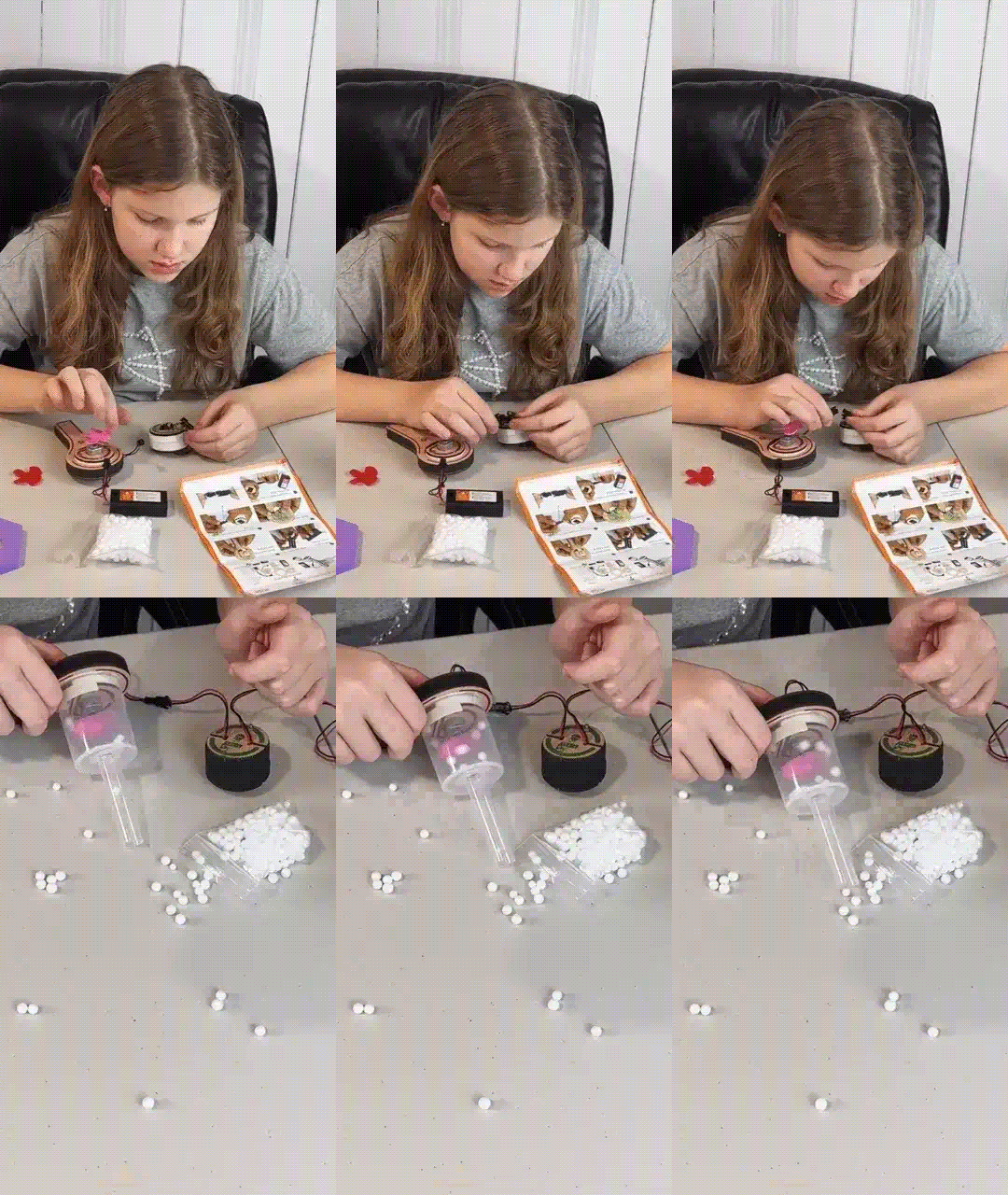
  • Take the cardboard pieces and insert them into the foam piece
  • Drop the metal balls into the syringe put the plunger back
  • Now insert the syringe in the middle of foam piece and rotate the syringe using palm
  • Observe how the images blend together due to the persistence of vision.
science activity (DIY) for kids hands on experiments for kids by working models teaching the kids how its working with working model science kit for kids, educational Toys for kids, creative toys for kids mini construction toys for kids best engagement for kids, toys to increase creativity in kids experiment and project ideas for kids working models and mini models on diy activities science kits for science fair, science exhibition, science expo Properties of light Light and its characteristics How light behaves Light and reflection Refraction of light Colors of the spectrum Light and mirrors Light and objects Light absorption Sources of light in nature Natural and artificial sources of light Light and vision Physics of light Optical phenomena Understanding light behavior Properties of visible light Reflection, refraction, and absorption of light Importance of light in everyday life Light in science and optics Characteristics of different light sources

Complete Instruction video on Light and Reflections

Quick understanding pic

science activity (DIY) for kids hands on experiments for kids by working models teaching the kids how its working with working model science kit for kids, educational Toys for kids, creative toys for kids mini construction toys for kids best engagement for kids, toys to increase creativity in kids experiment and project ideas for kids working models and mini models on diy activities science kits for science fair, science exhibition, science expo Properties of light Light and its characteristics How light behaves Light and reflection Refraction of light Colors of the spectrum Light and mirrors Light and objects Light absorption Sources of light in nature Natural and artificial sources of light Light and vision Physics of light Optical phenomena Understanding light behavior Properties of visible light Reflection, refraction, and absorption of light Importance of light in everyday life Light in science and optics Characteristics of different light sources

Conclusion:

Engaging in these five DIY activities will enrich students’ comprehension of light and reflections. Through constructing models, investigating multiple reflections, counting reversed images, exploring the dispersion of light, and demonstrating persistence of vision, students will gain hands-on experience and deepen their understanding of these captivating concepts. Enjoy these activities with your high school students or homeschooling children, and witness their curiosity and knowledge of light and reflections flourish!

Other crazy cool 8th Grade experiments kits!

5 million+ STEM learning kits delivered worldwide

Spark Curiosity & Discovery!

If you want to learn more about About Electroplating and electrolysis:

for Seo

Shopping Basket
Scroll to Top